Facet Joint Injection: Effective Support for Back Pain
Chronic back pain that persists despite medication and physiotherapy can significantly impair daily life. In such cases, facet infiltration—also known as a facet block—offers a targeted and effective method for relieving pain directly at the spine.
What is a facet infiltration?
The small vertebral joints are crucial for spinal mobility, yet they are susceptible to wear and tear. In facet infiltration, a mixture of medications is injected directly at the source of the pain. There are two approaches to this procedure:
- Periarticular Therapy = Medial Branch Block (MBB): Injection of medication into the pain-transmitting nerves.
- Intra-articular method: Injection directly into the joint capsule.
Both procedures aim to reduce pain and alleviate inflammation, particularly when conventional treatments are insufficient.
Advantages of Facet Infiltration
- Targeted Pain Relief: Precise injection into the painful facet joint
- Minimally invasive method: Minimal side effects and gentle procedure
- Rapid Results: Many patients experience relief shortly after treatment
- Lasting Effect: Pain relief often persists for an extended period
- Diagnostic Confirmation: Helps identify the precise source of pain and tailor the therapy
Treatment Procedure
You will be moved through the opening of the CT scanner while lying face down on a treatment couch. The therapy begins following an initial planning image.
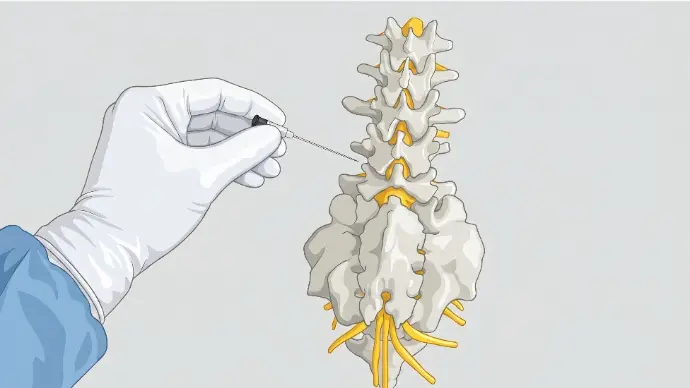
Using a probe, pain-relieving medications are delivered directly to the degeneratively altered facet joints to inhibit local inflammation, thereby achieving additional pain relief over an extended period. The procedure is performed under visual guidance using a CT scanner to ensure precise injection of the medication, thereby maximizing therapeutic success.
The painkiller takes effect within just a few minutes. The cortisone administered in addition inhibits inflammation—and thus pain—over a longer period as well.
After the treatment
The effects of the local anesthetic may impair motor function in the lower extremities; therefore, you are advised against driving a motor vehicle or operating other machinery on the day of the treatment. Ideally, you should be accompanied by someone who can escort you home and, if necessary, provide physical support. For your own well-being, you should take it easy; for this reason, engaging in sports or physical exercise on the same day is also not recommended.
The entire therapy and follow-up observation are typically completed within approximately 45 minutes, and you will receive the complete documentation for your treating physician.
Possible Side Effects
- Mild pain or tingling at the injection site
- Temporary muscle weakness or numbness in the treated area
- Rarely bruises or dizziness
The side effects are generally mild and temporary. Compared to taking tablets, local application is particularly gentle on the gastrointestinal tract.
Coverage of Costs
- Facet infiltration is generally covered by private health insurance providers.
- For patients with statutory health insurance, a referral from a physician with the additional qualification in "pain therapy" is required.
- In addition, we cooperate with several health insurance providers through selective treatment contracts.
- Alternatively, the treatment can be billed as an individual health service (iGeL).
We would be happy to inform you about the costs.
Frequently Asked Questions
The effect of facet joint infiltration typically begins shortly after the injection. Many patients report significant pain relief within a few hours of the procedure. In some cases, it may take a few days for the full effect to become noticeable.
The duration of pain relief varies depending on the patient and the condition. For many patients, the effects last for several weeks to months. Some even report a long-term improvement in their quality of life, as the treatment not only alleviates acute pain but also supports back mobility and functionality.
If a facet joint injection has provided relief but does not offer a permanent solution, facet denervation can be a sensible complementary treatment method. In this procedure, the pain-transmitting nerve fibers supplying the facet joints are precisely ablated using a heat probe.
Through this targeted damage to the nerves, pain transmission is interrupted, which can lead to long-term pain relief. Facet denervation is particularly suitable for patients suffering from recurrent pain in the facet joints whose symptoms cannot be adequately controlled by conservative treatments.
The decision to undergo facet denervation should be made in close consultation with the treating physician, in order to take into account individual needs and medical history.